
Plastics in Construction: Types, Uses, and Benefits

From skylights and wall panels to cladding, sound barriers, and insulation, plastic building materials are now part of almost every modern project. This guide explains how construction plastics work, which types are used most often, and how to choose the right material for your application with support from Laird Plastics.
Quick Answer: What Are Plastics in Construction?
Plastics in construction are engineered polymer materials used for glazing, cladding, roofing, insulation, piping, wall panels, sound barriers, and more. They offer high strength-to-weight ratios, impact resistance, corrosion resistance, and design flexibility, often outperforming traditional materials in durability and energy efficiency.
Common uses of plastics in building and construction include:
- Architectural glazing (skylights, canopies, façades)
- Wall and ceiling systems (FRP and composite panels)
- Piping, ducting, and cable management
- Roofing sheets and greenhouse covers
- Cladding, soffits, and decorative elements
- Sound barrier panels along roads and railways
- Thermal and acoustic insulation products
What Are Plastics Used for in Construction?
Plastics used in construction cover a wide range of products and applications. They appear in visible design elements, hidden performance layers, and critical infrastructure systems. When people talk about plastics in construction, they are usually referring to plastic building materials such as glazing sheets, panels, insulation, pipes, and protective wall systems.
Today, construction plastics support architects, engineers, and contractors by delivering specific performance: impact resistance, UV stability, fire ratings, moisture resistance, and corrosion resistance. These properties make plastic materials for construction a strong choice for demanding environments like hospitals, food facilities, transportation hubs, data centers, and industrial plants.
As a leading distributor, Laird Plastics helps project teams match the right plastic building materials to glazing, cladding, interior, and infrastructure needs across North America.
Types of Plastics Used in Building Construction
There are many types of plastics used in construction, each designed for specific loads, environments, and safety requirements. Below are some of the most common plastics used in building construction and how they are applied on real projects.
PVC: Versatile Profiles, Foam Sheets, and Building Components
Polyvinyl chloride (PVC) is one of the most widely used plastics used in construction. It appears in pipes, window profiles, trim, soffits, and foam sheets. PVC is valued for its durability, weather resistance, and ease of fabrication.
PVC foam sheets, for example, are lightweight, easy to cut, and ideal for interior cladding, displays, and architectural details. You can explore PVC foam options through Laird’s dedicated category: PVC Foam Sheets.
HDPE: Tough Sheets and Panels for Demanding Environments
High-density polyethylene (HDPE) is a tough, impact-resistant plastic often used where moisture, chemicals, or abrasion are concerns. It is common in wall protection, cutting surfaces, tank linings, and certain structural components.
For projects that need high-strength plastic building materials, especially in high-wear or wash-down areas, HDPE is a reliable choice. See Laird’s HDPE offerings in the HDPE Sheets category.
Polycarbonate: Impact-Resistant Glazing and Roofing
Polycarbonate is a clear, high-impact plastic used in skylights, canopies, façade glazing, machine guards, and security glazing. It provides glass-like clarity with far higher impact resistance and much lower weight.
Polycarbonate panels for construction are ideal when you need transparent or translucent surfaces that can handle hail, wind loads, and impacts. Multiwall polycarbonate sheets also improve insulation for skylights, canopies, and greenhouses.
To explore polycarbonate glazing sheets for your next project, visit Polycarbonate Materials at Laird Plastics.
Acrylic: Clear Panels for Skylights and Canopies
Acrylic is another clear plastic building material commonly used for skylights, canopies, signage, and decorative glazing. It offers excellent clarity, a glossy appearance, and good weatherability.
When you need lightweight plastic alternatives to glass with strong visual appeal, acrylic sheets are a popular option. Laird supplies acrylic materials through its Acrylic Sheets category.
FRP Wall Panels: Hygienic and Easy-to-Clean Surfaces
Fiber-reinforced plastic (FRP) wall panels are widely used in commercial kitchens, food processing plants, restrooms, and healthcare facilities. They create smooth, easy-to-clean surfaces with excellent moisture and impact resistance.
These FRP wall panels for commercial buildings often meet strict codes for hygiene and durability, making them ideal for high-traffic and wash-down environments.
EPS and Other Plastic Insulation Materials
Expanded polystyrene (EPS) and other plastic insulation systems contribute to the building envelope by improving thermal and acoustic performance. They are used in roofing systems, wall assemblies, and under-slab insulation.
These plastic materials for construction help reduce energy consumption while maintaining comfort and limiting thermal bridging.
Aluminum Composite Panels (ACM) and Hybrid Systems
Aluminum composite panels (ACM) combine aluminum skins with a plastic core to create lightweight, rigid panels used for cladding, façades, and signage. They are widely used in modern architecture due to their flatness, durability, and design flexibility.
Laird supports façade and cladding projects through its Aluminum Composite Panels (ACM) offering, helping designers and contractors specify the right panel systems.
Advantages of Plastic Building Materials vs. Traditional Materials
The advantages of plastics as building materials are driving their adoption across commercial, industrial, and even residential projects. When compared to glass, metal, or wood, plastics often deliver better value on a lifecycle basis.
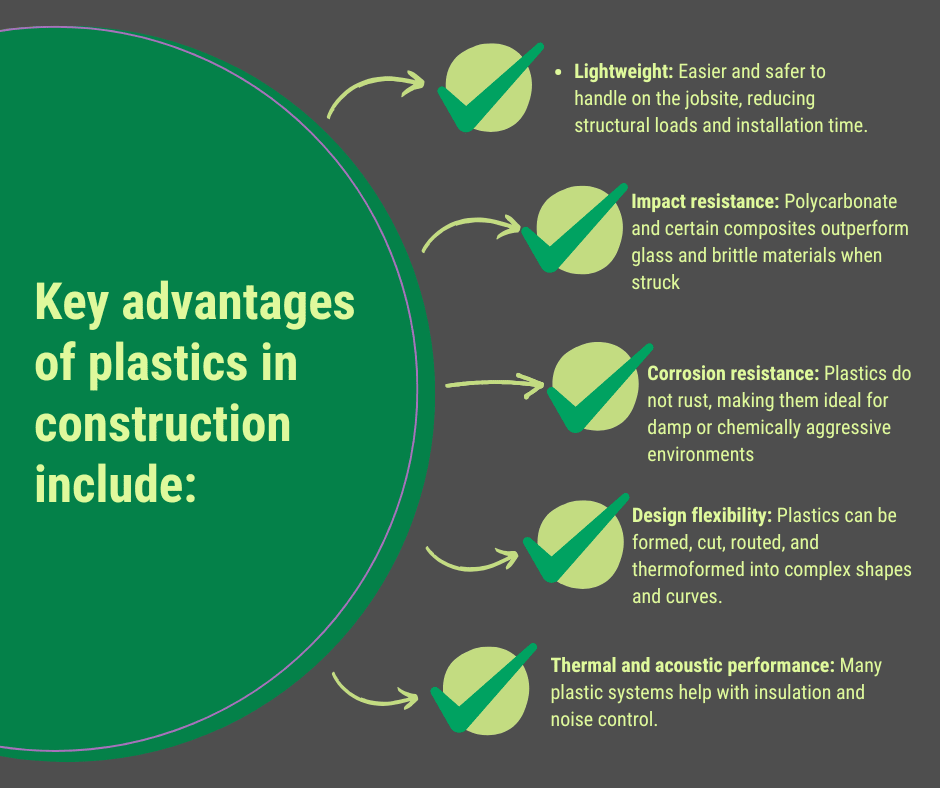
Key advantages of plastics in construction include:
- Lightweight: Easier and safer to handle on the jobsite, reducing structural loads and installation time.
- Impact resistance: Polycarbonate and certain composites outperform glass and brittle materials when struck.
- Corrosion resistance: Plastics do not rust, making them ideal for damp or chemically aggressive environments.
- Design flexibility: Plastics can be formed, cut, routed, and thermoformed into complex shapes and curves.
- Thermal and acoustic performance: Many plastic systems help with insulation and noise control.
- Lower maintenance: Smooth, non-porous surfaces are easier to clean and maintain over time.
These properties make construction plastics a strong choice for glazing, interior protection, and exterior cladding where performance and long-term value matter.
Are Plastics a Good Choice for Sustainable Construction?
A common question is whether plastics in construction can support sustainable and green building design. The answer depends on how materials are selected, installed, and managed over their lifecycle.
Many sustainable plastic building materials now focus on recyclability, extended service life, and reduced maintenance. Lightweight materials can lower transportation emissions. Long-lasting glazing and cladding systems reduce replacement frequency and waste.
Laird Plastics partners with customers to support ESG goals, recycling programs, and circular economy initiatives through its Sustainable Solutions platform.
When viewed over a full lifecycle, plastic building materials can support:
- Improved energy performance through better insulation and daylighting
- Reduced maintenance and replacement waste
- Recyclability at end-of-life in appropriate streams
- Lower transport emissions due to reduced weight
Where Plastics Fit in the Building Envelope
Plastics play a role across the entire building envelope, from exterior façades to interior partitions and service systems. When specifying plastic building materials, it is helpful to think in terms of the envelope layers.
Architectural Glazing and Daylighting
Polycarbonate and acrylic glazing sheets are widely used for skylights, canopies, entrance features, and translucent façades. They provide impact resistance, UV protection, and visual comfort while reducing the weight and risk associated with glass.
To explore architectural glazing materials and plastics used for daylighting, visit Architectural Glazing Plastics at Laird Plastics.
Cladding, Façades, and Decorative Surfaces
ACM panels, FRP systems, and other plastic-based cladding materials help designers achieve modern, clean façades with controlled performance. Lightweight cladding systems can simplify installation and reduce structural demands.
Roofing, Greenhouses, and Outdoor Structures
Polycarbonate and other UV-resistant plastics are used for greenhouse roofs, covered walkways, carports, and outdoor shelters. These plastic roofing sheets for greenhouses and exterior structures are designed to handle UV exposure, temperature cycles, and impact.
Sound Barriers and Infrastructure
Certain plastic sound barrier panels are engineered to reduce noise along highways, rail lines, or near industrial sites. These systems combine acoustic performance with impact resistance and long-term durability.
Choosing the Right Plastic for Your Construction Project
With so many types of plastics used in construction, the best way to select a material is to start with performance requirements. Ask what the surface needs to resist and how it will be installed and maintained over time.
Key questions to guide material selection:
- Is impact resistance more important than scratch resistance?
- Will the material be exposed to UV, chemicals, or frequent cleaning?
- Is clear visibility required, or is the panel mainly structural or decorative?
- What fire ratings, codes, or certifications apply?
- How important are weight and ease of installation?
For example, polycarbonate panels for construction are often best for high-impact glazing, while acrylic sheets may be chosen for high-clarity skylights and signage. FRP wall panels fit harsh, hygienic interiors, and HDPE sheets suit high-wear or corrosive environments.
Laird Plastics supports project teams through its Construction Plastics industry page, where you can connect with experts and explore cut-to-size and fabrication services for your specific application.
FAQs: Common Questions About Plastics in Construction
What are plastics used for in construction?
Plastics are used for glazing, cladding, roofing, interior wall panels, piping, sound barriers, insulation, and many other building components. They offer lightweight strength, impact resistance, and corrosion resistance, making them suitable for both visible design elements and hidden performance layers.
What types of plastics are used in building construction?
Common types of plastics used in building construction include PVC, HDPE, polycarbonate, acrylic, FRP, EPS, and hybrid materials like aluminum composite panels. Each type offers specific properties such as transparency, stiffness, impact resistance, or chemical resistance, allowing designers to match materials to performance needs.
What are the advantages of plastic as a building material?
Plastics provide a high strength-to-weight ratio, design flexibility, corrosion resistance, and strong thermal and acoustic performance. They are easier to handle on site than many traditional materials and often require less maintenance over time, improving lifecycle value for the building owner.
Is plastic a good building material for sustainable construction?
When selected and managed correctly, plastic building materials can support sustainable construction. Long-lasting systems reduce replacement waste, lightweight products can lower transport emissions, and certain plastics are recyclable at end-of-life. Partnering with a distributor focused on recycling and circular solutions, such as Laird Plastics, strengthens the sustainability profile of construction plastics.
Which plastic is best for roofing and skylights?
Polycarbonate and acrylic are the most common plastics used for roofing and skylights. Polycarbonate offers superior impact resistance and is ideal for high-abuse or hail-prone areas, while acrylic delivers excellent clarity and a polished appearance. Both materials are available in UV-stabilized grades for outdoor use.
Which plastics are used for doors, windows, and cladding?
PVC is widely used for window profiles, trims, and certain door components, while aluminum composite panels and other plastic-based cladding systems are used for façades. Polycarbonate can be used for door and window glazing where high impact resistance or security is required.
How long do construction plastics last?
Service life depends on the specific material, exposure conditions, and maintenance, but many construction plastics are designed to perform for decades when correctly specified. UV-stabilized polycarbonate, acrylic, and FRP systems, for example, can deliver long-term performance with proper installation and cleaning.
Are recycled plastic building materials safe and durable?
Recycled plastic building materials are engineered to meet relevant standards for structural performance, impact resistance, and safety. When sourced through reputable suppliers and used in appropriate applications, recycled plastics can be both durable and safe while reducing demand for virgin material.
What are the fire safety considerations for plastics in construction?
Fire safety is critical when using plastics in construction. Designers must consider flame spread ratings, smoke development, and applicable codes. Many plastic products are available in fire-rated grades that meet common building code requirements. It is important to consult local codes and work with knowledgeable suppliers when specifying these materials.
Can plastic building materials help with energy efficiency?
Yes. Plastics contribute to energy efficiency through improved insulation, reduced thermal bridging, and better daylighting. Multiwall polycarbonate, insulated panels, and well-designed glazing systems help control heat flow while admitting natural light, lowering overall energy consumption in many buildings.
Partner with Laird Plastics for Construction Plastics Expertise
As the demand for plastics in construction continues to grow, architects, contractors, and building owners need reliable partners who understand both materials and real-world project requirements. Laird Plastics combines deep product knowledge with a broad distribution network to supply polycarbonate, acrylic, HDPE, PVC foam, ACM, and many other construction plastics.
Whether you are designing an architectural glazing system, upgrading interior wall protection, or planning a new façade, Laird’s team can help you evaluate options and select the right plastic building materials for performance, sustainability, and budget.
Explore the full range of solutions starting with:
- Construction Plastics Industry Page
- Architectural Glazing Plastics
- Polycarbonate Materials
- Acrylic Sheets
- HDPE Sheets
- PVC Foam Sheets
- Aluminum Composite Panels (ACM)
- Sustainable Solutions at Laird Plastics
When you are ready to discuss a project or specification, reach out to Laird Plastics for material recommendations, cut-to-size services, and support tailored to your jobsite and building performance goals.