
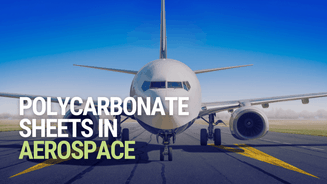
Polycarbonate Sheets in Aerospace
Introduction to Polycarbonate Sheets in Aerospace
When aircraft manufacturers need materials that can withstand extreme temperatures, impact forces, and stringent safety requirements while remaining lightweight, polycarbonate sheets emerge as the go-to solution. These engineered thermoplastics have revolutionized aerospace design, offering an exceptional strength-to-weight ratio that's nearly 250 times stronger than glass while weighing 50% less.
The aerospace industry's adoption of polycarbonate isn't just about performance—it's about meeting increasingly demanding regulatory standards. From cockpit windows that must resist bird strikes at 300+ mph to interior panels requiring flame-retardant properties, polycarbonate sheets deliver the reliability that keeps passengers safe at 40,000 feet.
What sets aerospace-grade polycarbonates apart from standard versions lies in their specialized formulations and certifications, designed to excel in the unforgiving environment where failure simply isn't an option.
Overview of Key Polycarbonate Products
The aerospace polycarbonate market features several specialized product lines designed specifically for aviation applications. LEXAN polycarbonate sheets dominate the industry, offering proven performance in cockpit glazing and interior components. TUFFAK polycarbonate provides another reliable option with excellent fabrication characteristics.
European manufacturers contribute EUROPLEX® F sheets, which meet stringent flame and smoke requirements. These products typically feature enhanced UV resistance, improved optical clarity, and specialized additives for aerospace environments. Each manufacturer offers different thickness ranges and performance specifications to match specific aircraft requirements. Understanding these key product families helps engineers select the most appropriate material for their specific aerospace application needs.
Tip: If you’re sourcing for regulated cabin interiors, prioritize documented FST performance (flame, smoke, toxicity) and the exact certification callouts required for your platform.
Criteria for Evaluating Polycarbonate Sheets
When selecting aircraft polycarbonate materials, engineers must evaluate multiple performance criteria that directly impact flight safety and operational efficiency. The most critical factors include flame resistance ratings, optical clarity retention, and temperature stability across extreme conditions.
Fire safety standards represent the primary evaluation benchmark. Aerospace material specifications require polycarbonate sheets to meet stringent flame and smoke generation limits, with materials typically needing FAR 25.853 certification for commercial aircraft applications.
Mechanical properties form the second tier of assessment criteria. This includes tensile strength, flexural modulus, and dimensional stability under thermal cycling. Aviation-grade polycarbonate sheets must maintain structural integrity across temperature ranges from -65°F to 200°F while resisting stress cracking. The evaluation process also considers fabrication compatibility and long-term durability factors like UV resistance and chemical compatibility with aircraft cleaning agents—setting the stage for understanding how these materials perform under real-world impact scenarios.
- Fire performance: FST behavior and required compliance (often FAR 25.853 for cabin materials).
- Optics: Light transmission, haze, long-term clarity retention, coating compatibility.
- Temperature performance: Stability across cold-soak and heat exposure.
- Mechanical strength: Tensile, flexural, impact retention at altitude conditions.
- Durability: UV resistance, chemical resistance (cleaners/solvents), stress cracking risk.
- Fabrication fit: Thermoforming, machining, edge finishing, and bonding requirements.
Comparative Analysis: Impact Resistance
Polycarbonate windows aerospace applications demand exceptional impact resistance that far exceeds traditional materials. Standard polycarbonate sheets deliver impact strength up to 250 times greater than glass and 30 times stronger than acrylic, making them ideal for cabin windows, cockpit displays, and protective barriers where debris strikes pose significant safety risks.
The LEXAN polycarbonate material demonstrates remarkable toughness through its ability to bend rather than shatter under extreme force. This flexibility prevents catastrophic failure modes that could endanger passengers during turbulence, bird strikes, or emergency landings.
What sets aerospace-grade polycarbonate apart is its retention of impact properties across temperature extremes. While competing materials become brittle at altitude conditions, quality polycarbonate maintains its shock-absorbing characteristics from -40°F to 280°F, ensuring consistent protection throughout flight operations and varying environmental conditions that aircraft encounter.
Comparative Analysis: Weight and Fuel Efficiency
High-performance polycarbonate delivers substantial weight advantages over traditional aircraft glazing materials, with densities approximately 50% lower than glass alternatives. This translates to meaningful fuel savings—every pound saved in aircraft weight can reduce fuel consumption by thousands of gallons annually across commercial fleets.
The weight differential becomes even more pronounced in large-scale applications. Where tempered glass windows might add 200–300 pounds to an aircraft's total weight, equivalent polycarbonate installations typically contribute less than 100 pounds. For cargo aircraft and long-haul flights, this reduction directly impacts payload capacity and operational range.
However, the fuel efficiency equation isn't purely about raw weight. Fireproof polycarbonate formulations often include additional flame-retardant compounds that can increase density by 10–15% compared to standard grades. Engineers must balance this trade-off against safety requirements, though even these enhanced materials remain significantly lighter than glass alternatives.
The cumulative effect extends beyond immediate fuel savings to include reduced structural reinforcement requirements, creating a cascading weight advantage that enhances overall aircraft efficiency while maintaining the optical clarity essential for aerospace applications.
Comparative Analysis: Optical Clarity and Aesthetic Appeal
Aircraft grade polycarbonate delivers exceptional optical performance that rivals traditional glass while maintaining critical safety advantages. Standard polycarbonate sheets achieve light transmission rates of 88–90%, providing crystal-clear visibility essential for cockpit windows and passenger viewing areas.
Unlike acrylic alternatives that can yellow over time, high-grade polycarbonate maintains its optical clarity throughout extended service life. The material's inherent UV stability prevents the cloudiness and discoloration that compromise both safety and passenger experience in aerospace applications.
However, polycarbonate's softer surface requires careful handling and specialized coatings to prevent scratching during installation and maintenance. Advanced polycarbonate formulations now incorporate hard-coat technologies that significantly improve scratch resistance while preserving the material's excellent optical properties and impact strength.
Summary Table: Comparison of Polycarbonate Options
The following comparison highlights key specifications across leading aerospace polycarbonate solutions, helping engineers select the optimal material for specific applications:
| Property | Lexan polycarbonate sheets | EUROPLEX® F | TUFFAK® | Fire-Rated Options |
|---|---|---|---|---|
| Weight | 50% lighter than glass | Ultra-lightweight | Standard density | Slightly heavier |
| Optical Clarity | 89% light transmission | 90%+ transmission | 88% transmission | 85–87% transmission |
| Fire Rating | UL94 V-0 available | FST compliant | Various grades | FAR 25.853 certified |
| Temperature Range | -40°F to 280°F | -40°F to 300°F | -30°F to 270°F | -40°F to 250°F |
| Impact Strength | 250x glass strength | High impact | Ultra-high impact | Moderate impact |
This technical comparison reveals that while all options deliver superior performance over traditional materials, specific formulations excel in different areas—with Lexan polycarbonate sheets offering the best balance of weight savings and optical performance for most aerospace applications.
Applications and Real Case Studies
Impact resistant polycarbonate finds extensive use across diverse aerospace applications, from commercial aviation to space exploration. Aircraft windshields represent one of the most demanding applications, where materials must withstand bird strikes at 300+ mph while maintaining optical clarity.
Military aircraft leverage these materials for cockpit glazing and protective barriers, capitalizing on the superior impact resistance compared to traditional acrylic alternatives. Space applications present unique challenges, with polycarbonate components successfully deployed in satellite windows and viewing ports where radiation resistance becomes critical alongside mechanical durability.
However, these real-world applications reveal important considerations that aerospace engineers must carefully evaluate before specification.
- Cockpit glazing & windshields: Impact performance and optical requirements.
- Cabin interiors: Panels, partitions, and housings requiring FST performance.
- Lighting & lenses: Diffusers, covers, and inspection access points.
- Military & protective barriers: High-impact applications where shatter resistance is critical.
- Space & satellite components: Specialized use cases that add radiation and environment constraints.
Limitations and Considerations
While polycarbonate excels in aerospace applications, understanding its limitations ensures proper material selection and application design. Polycarbonate scratch resistance remains a primary concern, particularly for optical applications like aircraft windshields where surface clarity is critical.
Chemical compatibility presents another challenge. Polycarbonate shows sensitivity to certain solvents and cleaning agents commonly used in aerospace maintenance. Exposure to incompatible chemicals can cause stress cracking or surface degradation over time.
Temperature cycling also affects long-term performance. While polycarbonate handles extreme temperatures well, repeated thermal expansion and contraction can lead to dimensional changes or internal stress development in precision applications.
Cost considerations shouldn't be overlooked either—specialized aerospace-grade polycarbonate typically commands premium pricing compared to standard industrial grades, impacting project budgets significantly.
- Scratch susceptibility: Often needs hard-coat or protective coatings for optical surfaces.
- Chemical sensitivity: Validate cleaners/solvents to avoid stress cracking.
- Thermal expansion: Design assemblies to handle cycling and movement.
- Cost: Aerospace grades and certifications can materially increase price.
Key Takeaways
Polycarbonate sheets represent a transformative material for aerospace applications, delivering exceptional impact resistance up to 250 times stronger than glass while maintaining optical clarity. Their lightweight properties reduce aircraft fuel consumption, while flame-retardant formulations meet stringent aviation safety standards.
However, successful implementation requires careful consideration of polycarbonate's limitations—particularly UV sensitivity and scratch susceptibility. Proper surface treatments and protective coatings are essential for long-term performance in demanding aerospace environments.
The material's versatility shines across applications from commercial aircraft windshields to spacecraft components, proving its value in both routine aviation and cutting-edge space exploration. As aerospace technology continues advancing, polycarbonate's unique combination of strength, clarity, and processability positions it as an indispensable material for next-generation aircraft design and innovation.
Revolutionizing the Aviation Industry with Polycarbonate Sheets: PDM's Commitment to Innovation
The aviation industry stands at the forefront of material innovation, where safety, performance, and reliability converge. Polycarbonate sheets have emerged as transformative components that enable aircraft manufacturers to push engineering boundaries while maintaining stringent safety standards. Modern aviation demands materials that can withstand extreme conditions—from temperature fluctuations at 40,000 feet to impact resistance during ground operations.
Innovation drives every aspect of aerospace material development, and polycarbonate's unique properties align perfectly with aviation's evolving needs. The material's exceptional strength-to-weight ratio revolutionizes aircraft design, allowing for lighter structures without compromising durability. This breakthrough directly translates to improved fuel efficiency and enhanced operational performance across commercial and private aviation sectors.
Polycarbonate Sheets for Aviation
Aviation applications demand materials that excel under extreme conditions, and polycarbonate sheets deliver precisely what the industry needs. These versatile panels find their way into cockpit windows, cabin dividers, and protective barriers where traditional glass simply can't perform.
The aviation sector's adoption of polycarbonate reflects practical engineering decisions. When aircraft encounter turbulence, bird strikes, or pressurization changes, polycarbonate's flexibility and impact resistance prevent catastrophic failures that could compromise passenger safety.
Modern aviation polycarbonate sheets undergo rigorous testing to meet stringent aerospace specifications, ensuring they maintain structural integrity at altitudes where temperatures plummet and atmospheric pressure drops dramatically. This reliability has made polycarbonate an indispensable component in both commercial and military aircraft design, setting the stage for understanding why this material has become aviation's preferred choice.
Why Polycarbonate is the Material of Choice for Aviation
Aviation engineers consistently choose polycarbonate over traditional materials for three compelling reasons. First, its exceptional strength-to-weight ratio delivers structural integrity without the weight penalties that plague metal alternatives. Second, polycarbonate's optical clarity remains stable under extreme temperature fluctuations, maintaining visual performance from ground level to 40,000 feet.
Most critically, polycarbonate's inherent flame resistance and low smoke generation meet stringent aviation safety standards without requiring additional chemical treatments. This unique combination of properties explains why major aircraft manufacturers have increasingly specified polycarbonate sheets for both interior and exterior applications across their fleets.
Applications of Polycarbonate Sheets in Aerospace
Polycarbonate sheets find their way into countless aerospace applications where traditional materials simply can't deliver. Aircraft windows represent the most visible use, where polycarbonate's optical clarity and impact resistance create safer passenger experiences. Interior components like overhead bins, partition walls, equipment housings benefit from the material's lightweight properties, and flame resistance.
However, polycarbonate's versatility extends beyond passenger areas. Cockpit instrumentation covers, cargo compartment panels, and even specialized lighting diffusers rely on this remarkable material. The aerospace industry particularly values polycarbonate for applications requiring both structural integrity and weight savings—a combination that directly impacts fuel efficiency and operational costs.
Polycarbonate for Aviation, Aerospace and Aircraft Industries
The aviation industry represents one of polycarbonate's most demanding applications, where material failure isn't just costly—it's potentially catastrophic. From commercial airliners to military aircraft, polycarbonate sheets have become indispensable for applications requiring the perfect balance of strength, clarity, and weight savings.
What sets aviation-grade polycarbonate apart is its ability to meet stringent regulatory requirements while delivering consistent performance under extreme conditions. Aircraft manufacturers rely on these materials for everything from cockpit glazing to interior panels, where traditional glass would add prohibitive weight and acrylic simply couldn't handle the stress.
The transition from experimental use to industry standard reflects polycarbonate's proven track record in critical applications where performance matters most.
Print Quality and Variable Data
Polycarbonate sheets deliver exceptional surface quality that meets aerospace's stringent visual and dimensional requirements. The material's inherent clarity and smooth finish eliminate the surface irregularities that can compromise optical applications or create stress concentration points in structural components.
Manufacturing precision becomes critical when dealing with variable thickness requirements across large aircraft panels. Modern polycarbonate production maintains thickness tolerances within ±0.002 inches, ensuring consistent performance whether you're working with thin interior panels or thick structural glazing components.
Surface quality standards for aerospace polycarbonate exceed typical industrial applications, with optical-grade sheets achieving less than 2% haze ratings while maintaining impact resistance that's fifty times greater than glass.
Polycarbonate Applications in Aviation, Aerospace and Aircraft Industries
Polycarbonate's unique properties make it indispensable across multiple aviation applications, from cockpit windows to interior components. The material's exceptional impact resistance, optical clarity, and lightweight characteristics address critical aerospace requirements where performance and safety intersect.
Aircraft manufacturers utilize polycarbonate for windshields, side windows, and cabin lighting covers, taking advantage of its ability to withstand extreme temperature variations and maintain structural integrity under pressure differentials.
Interior applications include overhead bins, seat components, protective barriers where flame resistance, and low smoke emission become paramount safety considerations. The aerospace sector particularly values polycarbonate's dimensional stability and resistance to stress cracking under continuous vibration and thermal cycling. These properties ensure long-term reliability in demanding environments where component replacement involves significant downtime and costs.
Need aerospace-grade polycarbonate fast?
If you're specifying polycarbonate for aviation interiors, glazing, or protective components, work with a supplier who understands aerospace requirements and can help match the right grade, thickness, and compliance documentation to your build.
FAQs
Are Lexan and polycarbonate the same thing?
Lexan is a brand name for polycarbonate resin manufactured by SABIC (formerly General Electric). While all Lexan is polycarbonate, not all polycarbonate is Lexan. This distinction matters in aerospace applications where material specifications often call for specific brand certifications.
The confusion stems from Lexan's market dominance—it became synonymous with polycarbonate much like Kleenex did with tissues. However, aviation professionals must distinguish between generic polycarbonate and certified Lexan products when sourcing materials for critical applications.
Other major polycarbonate brands include Makrolon, TUFFAK, and Europlex. Each manufacturer formulates their polycarbonate differently, affecting properties like UV resistance, flame retardancy, and impact strength. While the base polymer remains consistent, these variations can significantly impact performance in demanding aerospace environments where every specification matters.
What are the disadvantages of polycarbonate sheets?
Despite polycarbonate's impressive performance characteristics, it does have several limitations that engineers must consider. Polycarbonate is particularly susceptible to scratching and requires careful handling during installation and maintenance. The material can also yellow over time when exposed to UV radiation, though UV-stabilized grades help mitigate this issue.
Chemical sensitivity represents another key drawback. Polycarbonate can crack when exposed to certain solvents, alcohols, and cleaning agents commonly used in aerospace maintenance. Additionally, the material has a relatively high coefficient of thermal expansion compared to metals, which can create challenges in multi-material assemblies where dimensional stability is critical across temperature variations.
These limitations often drive the need for specialized surface treatments, protective coatings, or alternative material selection depending on specific application requirements. Understanding these constraints helps engineers make informed decisions when balancing polycarbonate's benefits against its protective requirements.
What thickness of polycarbonate is bulletproof?
Standard bulletproof polycarbonate requires a minimum thickness of 0.75 inches (19mm) to stop handgun rounds, while rifle protection demands 1.25–3 inches depending on the threat level. However, aerospace applications rarely use these extreme thicknesses due to weight constraints.
Most polycarbonate fabrication guides focus on standard thicknesses from 0.125 to 0.5 inches for aircraft windows and panels. These thinner sheets provide excellent impact resistance against bird strikes, debris, and impacts, but they're not designed for ballistic protection. The confusion often arises because polycarbonate's exceptional toughness—250 times stronger than glass—makes it seem bulletproof at any thickness. In reality, true ballistic protection requires specific engineering and testing protocols that extend far beyond typical aerospace material specifications.
Is polycarbonate used in planes?
Yes, polycarbonate is extensively used in commercial and general aviation for both interior and exterior applications. The material's exceptional impact resistance, optical clarity, and flame-retardant properties make it ideal for aircraft windows, cabin dividers, and cockpit instrumentation covers.
Aviation-grade polycarbonate must meet stringent aerospace material specifications for flame resistance, smoke generation, and structural integrity. Airlines commonly use polycarbonate for passenger window assemblies, where its ability to withstand pressure differentials while maintaining crystal-clear visibility proves invaluable.
The versatility of polycarbonate extends from small aircraft applications like leading edge protection to complex interior components that require both durability and aesthetic appeal. This widespread adoption across the aerospace industry demonstrates polycarbonate's unique ability to meet the demanding performance requirements that aviation applications require.
What are some common applications for polycarbonate in aerospace?
Polycarbonate serves dozens of specialized roles throughout modern aircraft, from cockpit windows to emergency lighting systems. The material's unique combination of optical clarity, impact resistance, and flame retardancy makes it indispensable across multiple aircraft systems.
Interior applications dominate polycarbonate usage, including overhead bins, seat components, galley equipment, and partition panels. These components benefit from polycarbonate's lightweight properties while meeting strict fire safety requirements that govern cabin materials.
External applications leverage the material's weather resistance and optical properties for navigation light covers, inspection panels, and wing tip lenses. However, these exterior uses require specialized UV-stabilized grades to prevent degradation from prolonged sun exposure at high altitudes.
Polycarbonate Sheets for Aviation
Polycarbonate sheets continue to revolutionize aerospace manufacturing through their unique combination of strength, clarity, and flame resistance. As aviation technology advances, these versatile materials will undoubtedly play an increasingly critical role in aircraft design and safety systems.
The aerospace industry's demanding requirements have driven continuous innovation in polycarbonate formulations, resulting in materials that exceed traditional performance boundaries while maintaining cost-effectiveness for manufacturers and operators alike.
For aerospace professionals seeking reliable polycarbonate solutions, partnering with certified suppliers who understand aviation specifications ensures compliance with stringent industry standards and delivers the performance your aircraft applications demand.