
Polycarbonate vs. Acrylic: The Complete Industrial Comparison
If you’re comparing Polycarbonate and Acrylic Sheet for an industrial project, you’re not alone—these clear thermoplastics are constantly confused because they look similar but behave very differently in real-world use.
Buyers searching for Plexiglass (often used as a generic term for acrylic) may actually need polycarbonate for safety glazing, machine guards, or high-impact environments. On the flip side, teams spec’ing “polycarbonate” sometimes really need the optical clarity, scratch resistance, and value of acrylic.
The main difference between polycarbonate and acrylic is that polycarbonate is virtually unbreakable but easier to scratch, while acrylic is clearer and more scratch-resistant but can crack under impact.
This guide breaks down performance, cost, machinability, UV/weathering behavior, and best-fit applications—so engineers, fabricators, and facility managers can spec the right transparent plastic the first time (and avoid rework).
You’ll also find scenario-based recommendations and FAQs designed to answer common “People Also Ask” questions.
Quick Comparison: Acrylic vs. Polycarbonate
| Property | Acrylic (PMMA) | Polycarbonate (PC) |
|---|---|---|
| Impact Strength | 10x stronger than glass; can crack under heavy impact | 250x stronger than glass; virtually unbreakable |
| Clarity / Light Transmission | 92% light transmission (clearer) | 88% light transmission |
| Scratch Resistance | Higher scratch resistance (better surface hardness) | Easier to scratch (often needs coating for abrasion resistance) |
| Cost | Typically lower cost | Typically higher cost |
| Machinability | Machinable; can chip/crack if stressed or improperly processed | Easier to machine; more forgiving in fabrication |
| UV Resistance | Generally better long-term optical clarity outdoors | May need UV-stabilized grades/coatings for outdoor clarity |
| Best Applications | Displays, glazing where clarity + scratch resistance matter | Machine guards, safety glazing, impact-prone environments |
What is Acrylic (Polymethyl Methacrylate)?
Acrylic (PMMA) is a transparent thermoplastic known for exceptional optical clarity and a harder, more scratch-resistant surface than polycarbonate. In industrial environments, acrylic is often specified when appearance, visibility, and long-term clarity are the priority—think viewing panels, display glazing, equipment covers where impacts are moderate, and applications where you want a “glass-like” look without the weight and break risk of glass.
In the market, acrylic is commonly referred to by brand names like Plexiglass and Acrylite. If you’re sourcing sheet stock for fabrication or replacement panels, start with Laird’s Acrylic selection to match thickness, clarity, and grade to your job.
Key acrylic advantages for industrial buyers:
- High light transmission: 92% (clearer than polycarbonate)
- Higher scratch resistance (better surface durability in handling/cleaning)
- Lower cost than polycarbonate in many comparable thicknesses
- 10x stronger than glass (while remaining more rigid/brittle than polycarbonate)
Where acrylic can fall short is impact toughness. Acrylic can crack or chip under severe impact or at fastener points if the design doesn’t account for stress (tight mounting holes, sharp corners, insufficient clearance, etc.). That’s why acrylic tends to shine in controlled environments while polycarbonate dominates in safety/impact-prone use.
Cast vs. Extruded Acrylic
Not all acrylic sheet behaves the same. The two common manufacturing types are cast and extruded. For industrial buyers, this matters because it can influence consistency, finishing, and how the material behaves during fabrication.
- Cast acrylic is commonly selected when optical quality and dependable performance for fabrication and finishing matter. If you need this grade specifically, Laird’s Cast Acrylic page is the most direct path to the right product family.
- Extruded acrylic is often chosen when cost and availability matter most and the application is less demanding on finish.
Best Applications for Acrylic
Acrylic is a strong choice when you want high visibility, crisp appearance, and better scratch resistance for routine cleaning and day-to-day wear.
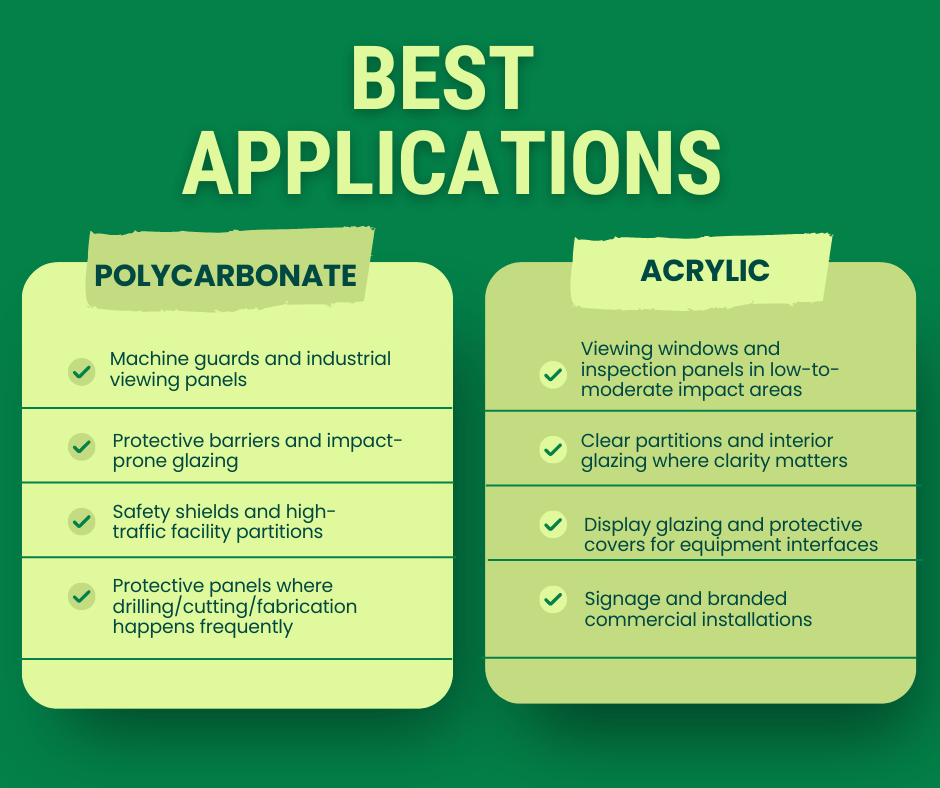
- Viewing windows and inspection panels in low-to-moderate impact areas
- Clear partitions and interior glazing where clarity matters
- Display glazing and protective covers for equipment interfaces
- Signage and branded commercial installations
- Transparent panels where cost sensitivity is real but you still want better-than-glass performance
What is Polycarbonate?
Polycarbonate (PC) is a transparent thermoplastic engineered for toughness. In industrial settings, it’s chosen when impact resistance, safety, and fabrication forgiveness matter more than perfect optical clarity. Polycarbonate is what you reach for when the consequence of breakage is unacceptable—machine guarding, protective glazing, safety barriers, and any environment where accidental impacts happen.
You’ll also see polycarbonate sold under well-known brand names like Lexan, Makrolon, Tuffak, and Palsun. For spec’ing and inventory, Laird’s Polycarbonate sheets page is the best starting point for the material family and available forms.
Key polycarbonate advantages:
- 250x stronger than glass (impact performance is the headline)
- Virtually unbreakable in many real-world environments
- 88% light transmission (slightly less clear than acrylic)
- Easier to machine (more forgiving during drilling/cutting/handling)
The tradeoff: polycarbonate is typically easier to scratch than acrylic. In high-contact or cleaning-heavy environments, abrasion can show up faster unless a coated or abrasion-resistant grade is selected.
The Unbreakable Factor
If you’re building or replacing transparent barriers where impact can happen—forklifts, carts, dropped tools, high-traffic facilities—polycarbonate is the material you spec when you need confidence. That’s why polycarbonate is common in safety-related glazing and protective panels.
A common industrial mistake is selecting acrylic because it’s clearer, then dealing with cracking around fasteners or breakage under unexpected impact. Polycarbonate reduces that risk—especially in guarding and barrier systems where things hit the panel, not “might hit it.”
Best Applications for Polycarbonate
Polycarbonate is the workhorse for tough environments, especially where safety and durability matter more than perfect optical clarity.
- Machine guards and industrial viewing panels
- Protective barriers and impact-prone glazing
- Safety shields and high-traffic facility partitions
- Protective panels where drilling/cutting/fabrication happens frequently
- Any transparent application where breakage is unacceptable
For applications tied to safety glazing and robust panel performance, explore Security Glazing options designed for demanding environments.
Choosing Between Polycarbonate and Acrylic: Decision Scenarios
When you need drilling, machining, or frequent fabrication
Winner: Polycarbonate. Polycarbonate is easier to machine and more forgiving during drilling/cutting/handling. If your job requires repeated modifications or shop-floor handling, polycarbonate reduces the risk of cracking from stress and fasteners.
When you need maximum clarity for visibility or presentation
Winner: Acrylic. Acrylic delivers 92% light transmission vs. polycarbonate’s 88%. If the panel is visibility-critical or appearance-driven, acrylic offers a clearer, more glass-like look.
When you need to hit a budget without sacrificing professionalism
Winner: Acrylic (often). Acrylic is typically the lower cost option and still provides 10x stronger than glass performance. If impact risk is low to moderate, acrylic can be the best value.
When you need impact resistance and safety performance
Winner: Polycarbonate. Polycarbonate is the go-to for safety and impact: 250x stronger than glass and virtually unbreakable in many real-world environments.
When you need outdoor exposure and weathering performance
Winner: Depends on grade (often acrylic for long-term optical clarity). Acrylic is commonly chosen where long-term outdoor clarity and appearance are priorities. Polycarbonate may require UV-stabilized grades/coatings to maintain clarity over time. If the application is outdoors, spec intentionally—don’t assume indoor-grade sheet will perform the same outside.
Frequently Asked Questions
Is Polycarbonate stronger than Plexiglass?
Yes. Polycarbonate is significantly stronger than acrylic (Plexiglass/Acrylite) in impact conditions. Polycarbonate is 250x stronger than glass and is often described as virtually unbreakable, while acrylic is 10x stronger than glass but can crack under high impact.
Does Polycarbonate turn yellow in the sun?
Polycarbonate can discolor over time depending on grade and exposure. For outdoor use, polycarbonate is commonly specified in UV-stabilized or coated options to help maintain clarity. If long-term outdoor optical clarity is the priority, acrylic is often selected unless impact safety requires polycarbonate.
Can you laser cut Polycarbonate?
Laser cutting polycarbonate can be tricky in production environments and is not always recommended for clean, reliable edges compared with other cutting methods. If laser cutting is a must, discuss your fabrication method and requirements with your supplier so you choose the right material and process for your application.
Which is more scratch resistant?
Acrylic is more scratch resistant than polycarbonate. Polycarbonate is easier to scratch, which is why abrasion-resistant coatings or coated grades are commonly considered when surface durability matters.
What are the cost differences?
In many cases, acrylic is lower cost than polycarbonate at comparable thicknesses. Polycarbonate typically costs more because it delivers substantially higher impact performance and fabrication forgiveness.
Which material is better for outdoor use?
It depends on the environment and performance priority. Acrylic is often chosen for outdoor glazing when clarity and appearance are key. Polycarbonate may be chosen when impact resistance/safety is the priority, often using UV-stabilized or coated options for better long-term clarity.
Conclusion
If you’re choosing between polycarbonate and acrylic for an industrial application, make the call based on impact risk, clarity needs, surface wear, and fabrication reality. Acrylic (Plexiglass/Acrylite) wins when you want maximum clarity (92% light transmission), better scratch resistance, and lower cost—and the environment won’t punish the panel with impacts.
Polycarbonate (Lexan/Makrolon/Tuffak/Palsun) wins when you need impact resistance (250x stronger than glass), safety performance, and easier machining, even if the surface is more prone to scratching.
Laird Plastics stocks both materials in multiple forms (sheet, rod, tube), so you can match the right plastic to the job.
Still not sure? Contact our team for a custom quote and we’ll help you spec the best option for your environment. Need local availability fast? Find your local Laird Plastics branch to source material and get support from a nearby team.